
The Distinctive Presence of Emperador Egyptian Marble
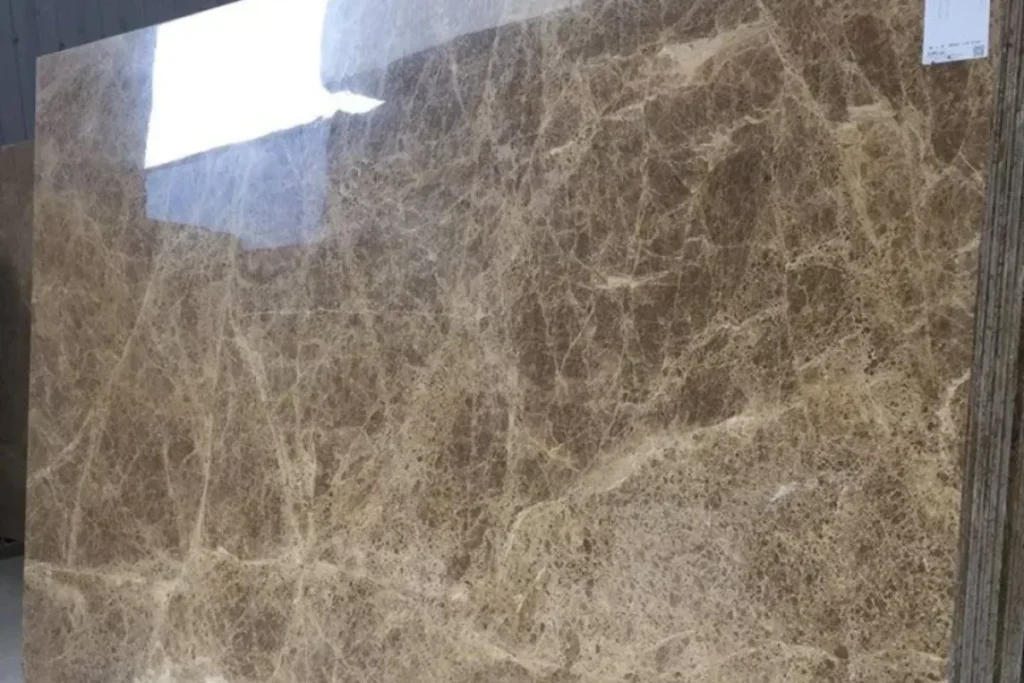
Designers often turn to dark, rich stones when they need to anchor a space, and Emperador marble from Egypt remains a primary choice for that task. Unlike the lighter, creamier varieties found elsewhere in the region, this stone offers a deep, moody base that commands attention. Its aesthetic is defined by a dense background color paired with intricate, often spider-web-like veining that creates a sense of movement across even the most expansive floor plans.
When selecting this material, architects usually focus on how the stone will interact with natural light. Because of its dark pigment, the marble can easily dominate a room if not balanced properly, making it ideal for features like foyer flooring or accent walls. Stone Castle in Cairo frequently manages requests for this material, providing slabs that allow specifiers to see the full flow of the veins before committing to a final cut.
Understanding the Visual Identity
The core of the Emperador slab appearance lies in the interplay between its primary earth-toned base and the stark white or lighter brown veining that cuts through it. This contrast is never uniform; natural stone variations mean that one shipment might favor darker, espresso-toned grounds while another leans into a slightly warmer, chocolate-like brown. Designers must accept that this variance is a feature, not a bug, of working with natural, sediment-formed materials.
To avoid disappointment, always request dry-lay photos from the supplier. By seeing the slabs aligned in a sequence, you can gauge the intensity of the webbing and ensure the flow of the veins matches the design intent of the space. Relying on a single small sample piece is rarely enough to understand the character of a material that thrives on its large-scale patterns. The movement is meant to be viewed in its totality, across a wall or a floor, rather than condensed into a six-inch square.
Standardization in Format and Fabrication
Choosing the right cut is just as significant as choosing the stone itself. The Emperador tile format is a popular choice for contractors looking for manageable installation in residential bathrooms or commercial hallways, typically arriving in standardized thicknesses. These tiles maintain the beauty of the original slab while allowing for more precise handling and layout planning in smaller architectural footprints.
For custom projects, many designers opt to forgo standard tiles in favor of full-slab fabrication. This approach is common in high-end kitchen islands or bespoke reception desks, where the goal is to minimize visible grout lines. When you work with large slabs, the focus shifts toward book-matching—the process of mirroring two slabs to create a singular, expansive pattern. While this method requires more material and careful waste management, the visual payoff is a seamless surface that acts as the focal point of the room.
Fabricators often recommend a honed finish for this particular marble. While a polished surface highlights the depth of the dark base and makes the veining pop, it is also prone to showing water spots and scratches in high-traffic areas. A honed, matte finish softens the overall look, masking minor imperfections and providing a more tactile, organic feel that complements contemporary interior styles.
Integration Strategies for Dark Stone
Using a dark stone like Emperador Egyptian marble requires a strategy for lighting. If a space is already devoid of natural light, the walls or floors will feel heavy, potentially shrinking the visual volume of the room. To counter this, lighting designers often integrate recessed LEDs or cove lighting to highlight the texture of the stone. By skimming light across the surface, you emphasize the three-dimensional quality of the veins, turning a dark wall into a dynamic piece of art.
Color theory also plays a vital role. Warm lighting brings out the chocolate undertones of the stone, making the room feel cozy and intimate. Conversely, using cool-toned, daylight-spectrum bulbs can make the white veining appear more clinical and sharp, shifting the aesthetic toward a more industrial or minimalist vibe. If you are aiming for a luxurious, warm atmosphere, lean into ambient lighting with a lower Kelvin rating.
Another common mistake is neglecting the secondary finishes in the room. Emperador marble works beautifully alongside metallic accents—specifically brass or aged gold hardware. The warmth of the metal echoes the underlying warmth found within the marble’s veins, creating a cohesive color palette. Brushed nickel or stainless steel can sometimes clash if the marble has a heavy brown hue, so perform a test with hardware finishes before finalizing the order.
Navigating Maintenance and Longevity
Natural stone is porous, and Emperador is no exception. Because it is a marble, it will react to acidic substances like lemon juice, vinegar, or harsh household cleaners. Etching is a real risk if the stone is installed on a kitchen countertop. Sealants are necessary, but they are not a cure-all. A professional-grade impregnating sealer should be applied upon installation and periodically thereafter to minimize absorption, but homeowners must be prepared for the reality of “living with” the stone.
For high-traffic flooring, the primary concern is mechanical wear. Over years of use, grit and sand tracked in from outside can cause microscopic abrasions that dull the finish. The best defense is a proactive approach: high-quality entry mats and a strict “no-abrasive-cleaner” policy. Use pH-neutral stone cleaners specifically formulated for marble to maintain the luster without stripping away the protective sealant. Many professional stone installers suggest avoiding standard grocery-store floor soaps, as these can leave a residue that builds up over time and attracts more dirt.
Sourcing and Quality Control
When sourcing Egyptian marble, the supply chain matters. Egypt has a long history of stone quarrying, but not all quarries produce identical results. Regional variance in mineral density means that some blocks are more prone to fissuring than others. Reputable suppliers will provide data on the compressive strength and absorption rates of their stock, which is essential for commercial projects that require adherence to building codes.
Do not be afraid to ask for block numbers. When you visit a warehouse or look at digital inventory, ensure that all slabs for a single room come from the same batch. Because marble color profiles shift depending on the specific vein or layer being excavated, mixing slabs from different periods of extraction can lead to jarring color shifts that are difficult to correct once installed.
Verification is key. If you are working on a large-scale project, inquire about the “resin” process. Some dark marbles are treated with epoxy resins to fill natural voids and fissures, increasing the structural integrity of the stone. This is standard industry practice, but it is important to know if the stone has undergone this process, as it changes the way the stone behaves during cutting and polishing. A stone that has been heavily “resinated” will be more durable but may lack the raw, porous character of an untreated slab.
The Evolution of Modern Applications
Beyond traditional flooring and wall cladding, architects are finding new ways to utilize Emperador Egyptian marble in modern spatial design. We are seeing a rise in the use of this stone for integrated joinery, where the marble is used to face cabinetry or as a base for custom shelving units. This creates a sense of continuity that traditional wood-and-stone pairings sometimes lack. By wrapping a desk or a vanity in the same material as the floor, you create a monolithic, sculptural effect that is highly desired in current high-end interior design.
Another emerging trend involves texture-based design. Rather than polished or honed surfaces, some designers are opting for sandblasted or brushed finishes. Sandblasting pulls the softer elements of the stone away, leaving behind a rugged, earthy surface that highlights the vein patterns in a completely different light. While this is less practical for countertops, it is an exceptional choice for accent walls or external design elements where you want the character of the marble to feel more raw and unrefined.
Addressing Common Misconceptions
One frequent misconception is that dark marble is “harder” to care for than light marble. In reality, the maintenance requirements are dictated by the mineral composition, not the color. The main difference is visibility. While a light-colored marble might hide dust better, a dark marble like Emperador hides spills better. However, it does tend to highlight surface scratches and etching due to the high contrast between the shiny surface and the dull etched mark. Understanding this trade-off is essential for setting client expectations.
Another myth is that natural stone is unsustainable. Compared to manufactured quartz or porcelain, which require high-heat industrial processing and resin-heavy manufacturing, natural marble has a lower carbon footprint in terms of production. It is a finite resource, certainly, but when sourced responsibly from local quarries, it represents a traditional material that has been used for centuries, proving its longevity. If you are working on a project with a focus on green building standards, look for suppliers who can verify the energy consumption of their extraction methods.
Collaborating with Your Fabricator
The relationship between the architect, the supplier, and the fabricator is a tripod. If one leg fails, the project suffers. Early communication with your fabricator is non-negotiable. Share your layout drawings well before the stone is delivered. A seasoned fabricator will point out potential weak points in your design—such as narrow strips of stone that are likely to snap during transit or installation. These professionals have seen the material handle the stresses of gravity, temperature fluctuations, and heavy usage, and their input can save you from costly mid-installation headaches.
Discuss edge profiles early on. With a dark, moody marble, the edge profile dictates how light interacts with the stone. A mitered edge—where two pieces of stone are cut at 45-degree angles to meet—can make the slab appear significantly thicker than it is, creating a solid, chunky look that works well for modern waterfall edges on islands. A pencil-round edge, by contrast, feels more traditional and is less likely to chip over time. These small details aggregate into the final feel of the room, turning a selection of rock into a finished, polished design.
The Future of Emperador in Architecture
As the industry moves toward more “emotional” design—spaces that evoke a sense of grounding and history—the demand for materials with deep, organic character is rising. Emperador Egyptian marble fits this narrative perfectly. It is not a trend-based material that will look dated in five years; it has a timeless quality that works in both hyper-modern lofts and classically inspired homes. By focusing on the inherent beauty of its deep base and the complexity of its veins, you can create spaces that feel both elevated and deeply personal.
Remember that the stone is merely a medium. Its success depends entirely on how it is curated. Whether you are using it to create a dramatic, dark bathroom sanctuary or a sophisticated living room focal point, respect the material’s character. Don’t hide the veins—celebrate them. Use the scale of the slab to your advantage and let the stone define the rhythm of the room. When done correctly, Emperador marble does more than cover a surface; it defines the room’s entire personality, lending it a sense of weight, drama, and history that few other materials can replicate.
When you walk into a space anchored by this material, you feel it immediately. There is a permanence to the aesthetic that brings a certain level of gravitas to a commercial lobby or a primary bedroom. It is a material for those who want their design choices to stand the test of time, refusing to bow to the quick turnover of design fads. Through careful selection, precise fabrication, and a commitment to maintenance, this Egyptian treasure offers a design experience that remains unmatched in the world of natural stone.
Practical Tips for Procurement
Always inspect the back of the slabs for mesh reinforcement. In darker marbles, the structural mesh is usually applied to the back to ensure the stone holds together during transport. If you notice signs of rusting or loose mesh, that is a red flag regarding the quality of the resin treatment or the storage conditions. Good stone should feel solid, even if it has a high vein content. If the slab feels overly flexible, it may require a sub-floor or a plywood underlayment during installation, which you must plan for in your elevation drawings.
Coordinate your logistics. Because marble is exceptionally heavy and brittle, transporting it requires specialized equipment. Work with a logistics provider who understands the sensitivity of stone. Even the most beautiful slab can be ruined by improper handling during delivery. The effort required to transport, cut, and install such a heavy, elegant material is part of the investment. When you see the final, cured result—the way the afternoon light catches the crystalline structure of the veins—you will understand exactly why this marble remains a favorite for designers who refuse to compromise on quality.