
Granite Coping around a Swimming Pool
Selecting the right material for a pool edge defines both the safety and the longevity of an outdoor space. Egyptian granite has emerged as a preferred choice for architects and contractors who prioritize natural durability over synthetic alternatives. Unlike composite materials that can fade or crack under intense sun exposure, granite offers a structural integrity that withstands constant water contact and chemical maintenance. When sourced from reputable suppliers like Stone Castle, these stones provide a consistent aesthetic that anchors the design of a luxury swimming pool. That is the practical point of pool coping egyptian granite">pool coping egyptian granite.
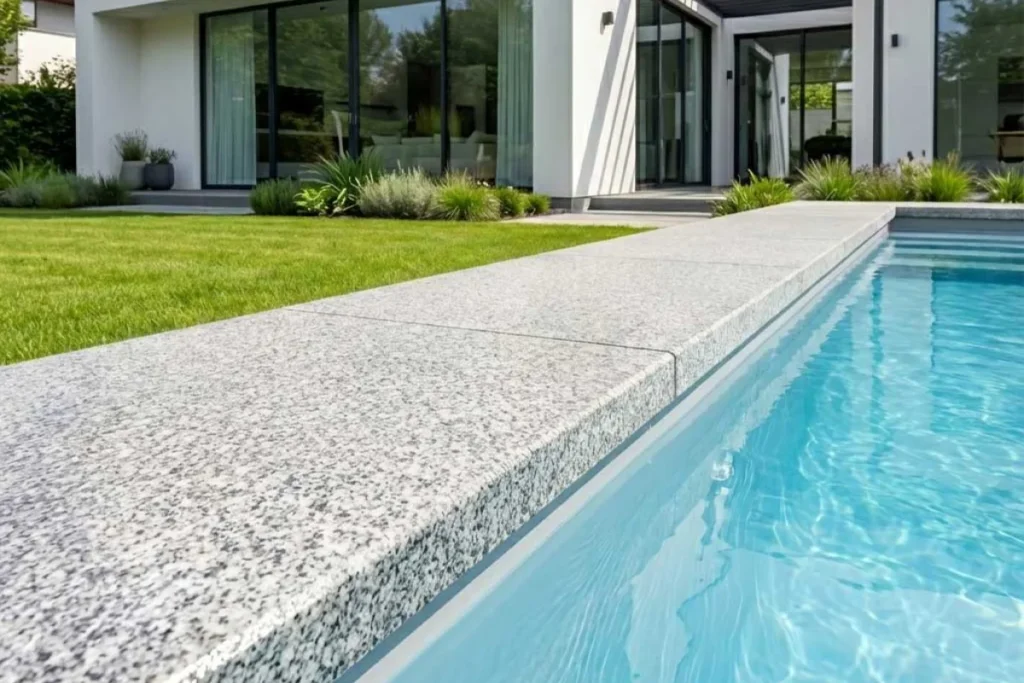
The primary concern for any installation remains the transition between the water and the surrounding patio. Egyptian granite comes in various hues, ranging from soft grays to deep, speckled blacks, allowing for significant design versatility. However, the technical specifications of the material must always take precedence over color choices. Contractors must verify that the stone is dense enough to handle freeze-thaw cycles if the pool is in a variable climate, and designers must ensure the finish prevents hazards when the stone is saturated.
Understanding Material Characteristics and Density
Egyptian granite is naturally dense, which is its greatest asset for aquatic environments. Because of its low porosity, it resists the absorption of pool chemicals, preventing the unsightly staining or surface erosion that often plagues softer limestones or porous sandstones. When evaluating slabs for a project, ask the exporter for a sample to perform a simple water absorption check yourself. If water beads on the surface rather than soaking in immediately, the material is likely dense enough for exterior use.
Beyond density, color stability remains a standout feature of granite compared to marble types like Samaha beige Egyptian marble. While marble is often chosen for its veining and elegance, granite is the workhorse of the industry. It maintains its integrity even when submerged partially in saline or chlorinated water. Architects should note that because this is a natural product, minor variations in mineral flecks are expected, and these should be reviewed as part of the natural character of the stone rather than as defects.
Designing for Safety with Proper Finishes
Safety is the primary driver of stone specification in pool areas, particularly regarding the pool deck stone grip. A polished surface is never appropriate for pool coping, as it becomes dangerously slick when wet. Instead, professional installers rely on thermal or flamed finishes. The flaming process involves exposing the granite surface to an intense heat source, which causes the crystals to pop and creates a rough, slip-resistant texture. This is essential for preventing falls during summer months when pool activity is at its peak.
Another option for a more refined look is the bush-hammered finish. By mechanically pecking the surface, you achieve a uniform, matte texture that feels comfortable underfoot while retaining necessary traction. If you are aiming for a seamless aesthetic between the water edge and the patio, consider a honed finish, provided the stone’s coefficient of friction meets local safety regulations. Always test a sample wet to ensure it meets your specific project safety requirements before placing a bulk order.
Addressing Thermal Conductivity and Comfort
One common critique of natural stone in hot climates is that it absorbs heat. While granite is denser than concrete pavers, its thermal performance can be managed through color selection. Light-colored granites, such as those with white or light gray base tones, reflect a higher percentage of solar radiation. This prevents the coping from becoming uncomfortably hot for swimmers climbing out of the pool. If you prefer a darker, dramatic look, be aware that you will need to prioritize shade structures like pergolas or umbrellas to keep the surface cool.
Contractors should also consider the profile of the coping stone itself. Bullnose edges—where the edge is rounded off into a smooth, half-circle profile—are popular for comfort. They feel soft against the skin when someone sits on the edge of the pool. Alternatively, a square edge with a slight bevel (chamfered edge) offers a more modern, linear aesthetic. The choice between these profiles should be based on the intended use of the pool; residential family pools often benefit from the safety of bullnose, while boutique hotel pools may opt for the clean lines of square-edge granite.
Technical Installation Requirements for Long-Term Durability
Proper installation is just as important as the material itself. Because Egyptian granite is heavy, the sub-base must be properly compacted to prevent shifting. Any movement in the foundation will eventually lead to cracks in the grout lines or, worse, the stone itself. Installers should use high-quality, polymer-modified thin-set mortar that is specifically rated for exterior underwater applications. Using standard interior-grade adhesive is a shortcut that will fail after the first winter cycle.
Grouting is the next critical junction. In a pool environment, grout is constantly subjected to pressure and chemical exposure. Epoxies or high-performance cementitious grouts with mold inhibitors are highly recommended. A common failure point is the perimeter sealant. The joint between the coping and the water-line tile, as well as the joint between the coping and the deck, must be filled with a flexible, pool-grade silicone caulk. This allows the stone to expand and contract with temperature fluctuations without causing the mortar bed to crack.
Maintenance Best Practices
Maintaining Egyptian granite coping is significantly easier than dealing with softer, porous materials. Because the stone is naturally resistant to acids and bases, it handles typical pool water chemistry well. However, you should still avoid using heavy-duty acid washes during routine cleaning, as these can etch the surface and alter the texture of the stone over time.
For regular cleaning, a simple solution of water and a pH-neutral stone cleaner is sufficient. If you notice calcium buildup from pool water evaporation, a soft-bristled nylon brush can remove the deposits without scratching the granite. If the stone was sealed during installation—which is advised to prevent dark water stains—ensure the sealer is a breathable, penetrating product. Avoid topical coatings or waxes, as these will peel and become unsightly under the harsh UV radiation found in most pool areas.
Managing Natural Color Variation and Sourcing
One challenge often faced by landscape designers is the inconsistency inherent in natural stone. Egyptian granite is extracted from vast quarries, and different layers of the earth can yield slightly different shades or mineral compositions. To manage this, it is standard practice to order “job lots.” This ensures that the entirety of your coping comes from the same extraction cycle, which minimizes major color shifts across the deck. Always insist on seeing a photograph of the current slab batch from your supplier, such as Stone Castle or similar reputable exporters, before shipping.
Furthermore, remember that granite is a natural material that reflects the geology of the region. Do not expect the uniformity of ceramic or porcelain tile. The beauty of granite lies in its depth; the crystalline structure catches the light differently throughout the day. When working with clients, frame these variations as unique characteristics of a high-end, natural product rather than flaws. This mindset shift is vital for client satisfaction in luxury landscaping.
Selecting the Right Slab Thickness
The standard thickness for pool coping is usually between 3cm and 5cm. While 2cm slabs might appear more economical, they lack the structural weight required to stay pinned firmly against the pool beam. Thinner stones are also more prone to fracturing during installation or if heavy objects fall on them. A 3cm thickness is generally considered the “sweet spot” for most residential applications, offering a substantial look and the necessary durability to handle the freeze-thaw expansion of the pool structure.
If the design calls for a “floating” or “cantilevered” edge, you may need even thicker stone to ensure structural integrity over the overhang. In these cases, work closely with a structural engineer to confirm that the weight of the stone is supported correctly. The last thing any homeowner wants is for the edge of their pool to sag or crack because the stone was not reinforced to support its own weight over an open gap.
The Sustainability of Egyptian Granite
As the construction industry moves toward more sustainable practices, natural stone remains a highly competitive option. Unlike synthetic deck materials, which are often petroleum-based and difficult to recycle, granite is an inert, natural substance. It does not off-gas volatile organic compounds (VOCs) and has an incredibly long life cycle. Many granite installations can last for decades, often outliving the swimming pool equipment itself.
By choosing locally sourced stone—such as granite from the Egyptian desert—you are investing in a product that has a relatively low manufacturing footprint compared to fired ceramics or energy-intensive concrete products. The transport cost is the primary environmental impact, but because these stones are dense and durable, they rarely need replacement, meaning the long-term carbon cost is very low. When you choose high-quality stone, you are essentially building an installation that will stay in place for generations.
Planning for Drainage and Slopes
An often-overlooked aspect of pool coping design is the drainage slope. The coping should never sit perfectly flat. A slight slope of 1/8 to 1/4 inch per foot, angled away from the pool, is essential. This ensures that rainwater, cleaning runoff, or pool splash-out does not pool on the coping, which would increase the risk of staining and slipperiness. Water should be directed toward designated drainage grates or perimeter landscaping to keep the area around the pool deck dry.
If you are installing a linear drainage system, the stone can be cut to fit snugly against the drain grate. This creates a refined, professional look. Ensure your contractor verifies the width of the stone against the width of the pool shell. Any gap between the pool wall and the stone must be filled with a rigid backing before the mortar is applied to prevent the stone from sinking inward over time.
Common Pitfalls to Avoid During Construction
Avoid the “rushed job” mentality. A common mistake is laying the coping while the concrete bond beam is still curing. Concrete shrinks as it cures; if you place heavy granite coping on top of fresh concrete, the shrinkage will transfer to the stone and cause it to crack. Always wait at least 28 days for the pool’s structural concrete to cure before beginning the stone installation.
Another pitfall is improper adhesive coverage. When setting granite, the “spot bonding” technique—placing dabs of mortar in the corners and center—is unacceptable. This creates voids where water can collect, leading to freeze-thaw damage or future stone detachment. Instead, use a notched trowel to ensure 100% coverage of the mortar on the back of the stone. This full-contact approach is the difference between a pool edge that lasts five years and one that lasts fifty.
The Value Proposition of Natural Stone
While the initial cost of Egyptian granite may be higher than concrete pavers or manufactured stone, the long-term value is undeniable. Natural stone does not suffer from the same UV degradation that causes plastic or synthetic edges to peel, crack, and discolor within a few seasons. Furthermore, granite is timeless. Trends in backyard design change, but a well-executed natural granite edge remains elegant regardless of whether your surrounding deck is wood, grass, or stone.
Homeowners often find that the investment in quality coping pays off in property value. Potential buyers recognize the permanence of granite and the associated low maintenance requirements. It signals a project where the owner prioritized quality materials over temporary cost-cutting, which is a strong selling point for luxury properties. Whether you are aiming for a rustic, rugged, or modern look, the adaptability of Egyptian granite makes it one of the most reliable assets in a landscape architect’s toolkit.
Refining the Aesthetic Details
Once you have decided on the density, thickness, and finish, the final touch is the color selection. Egyptian granite offers a palette that is often deeper and more complex than its counterparts from other regions. You can find stones with rich pink undertones, deep charcoal hues with bright quartz flecks, or soft, muted grays that act as a neutral canvas for the rest of your landscaping. Spend time viewing samples in the actual light of your pool area.
Sunlight changes the appearance of stone; a gray stone might look significantly darker under the deep blue water of a pool than it does on a flat surface in the shade. Compare the stone against your proposed waterline tile colors as well. A high-contrast pairing—such as dark granite against light tile—will emphasize the geometric lines of the pool, while a monochromatic pairing creates a sleek, infinity-edge effect. The goal is to ensure the coping complements the water’s reflection rather than competing with it.
Strategic Supplier Relationships
Working with an experienced supplier like Stone Castle or similar entities that specialize in direct import ensures that you get technical support along with your material. These suppliers often provide data on the chemical resistance and slip coefficients of their specific batches. Don’t be afraid to ask for these technical specifications. A project manager who understands the “why” behind the stone choice will always deliver a better outcome than one who simply picks the cheapest slab in the yard.
In addition to the raw slabs, ask your supplier about matching materials. If you need pavers for the deck or wall caps for a raised spa, using the same material source ensures color consistency across the entire backyard project. This holistic approach simplifies your supply chain and guarantees that all elements of the hardscape speak the same design language. When you focus on high-quality sourcing and precise installation techniques, the result is not just a pool edge, but a permanent, beautiful feature that enhances the entire outdoor experience.